

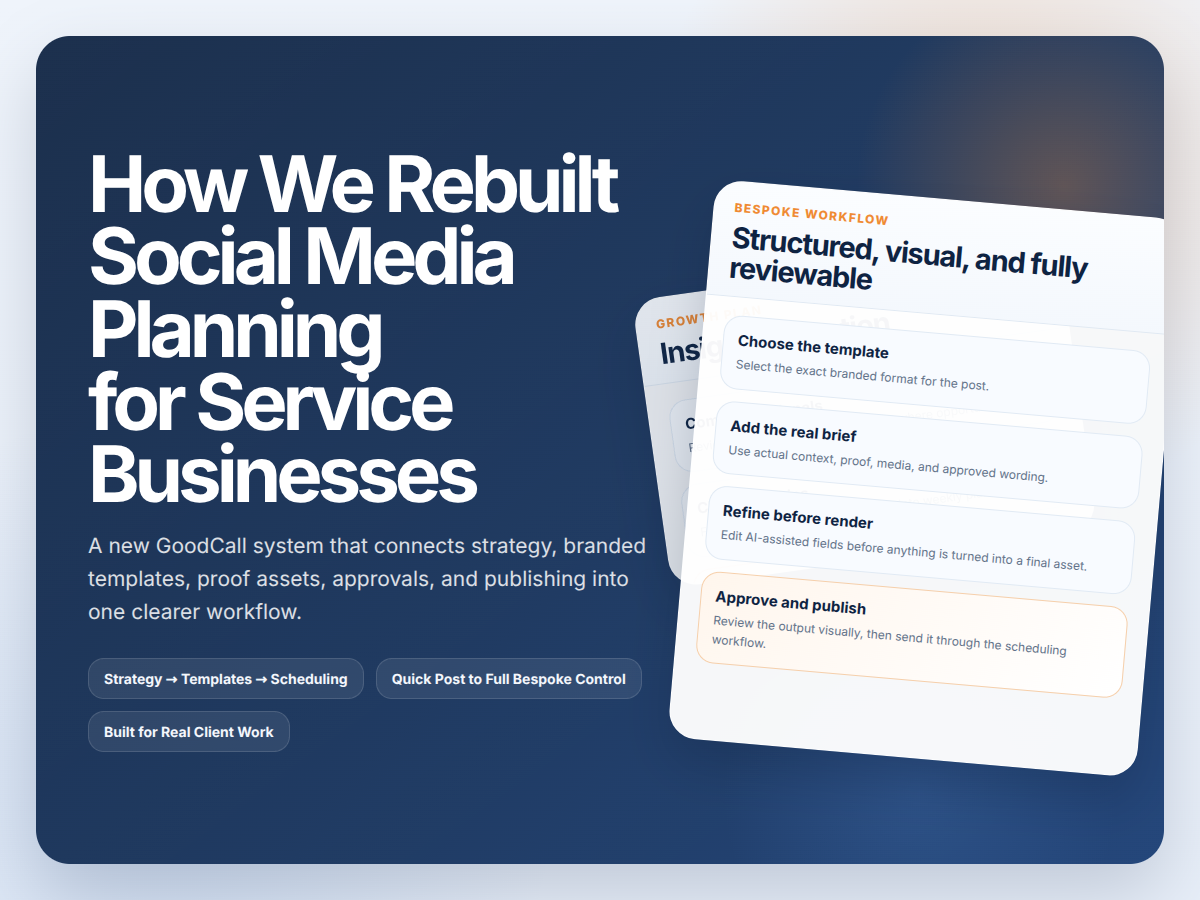
Building a Smarter Social Media Planning System for Service Businesses
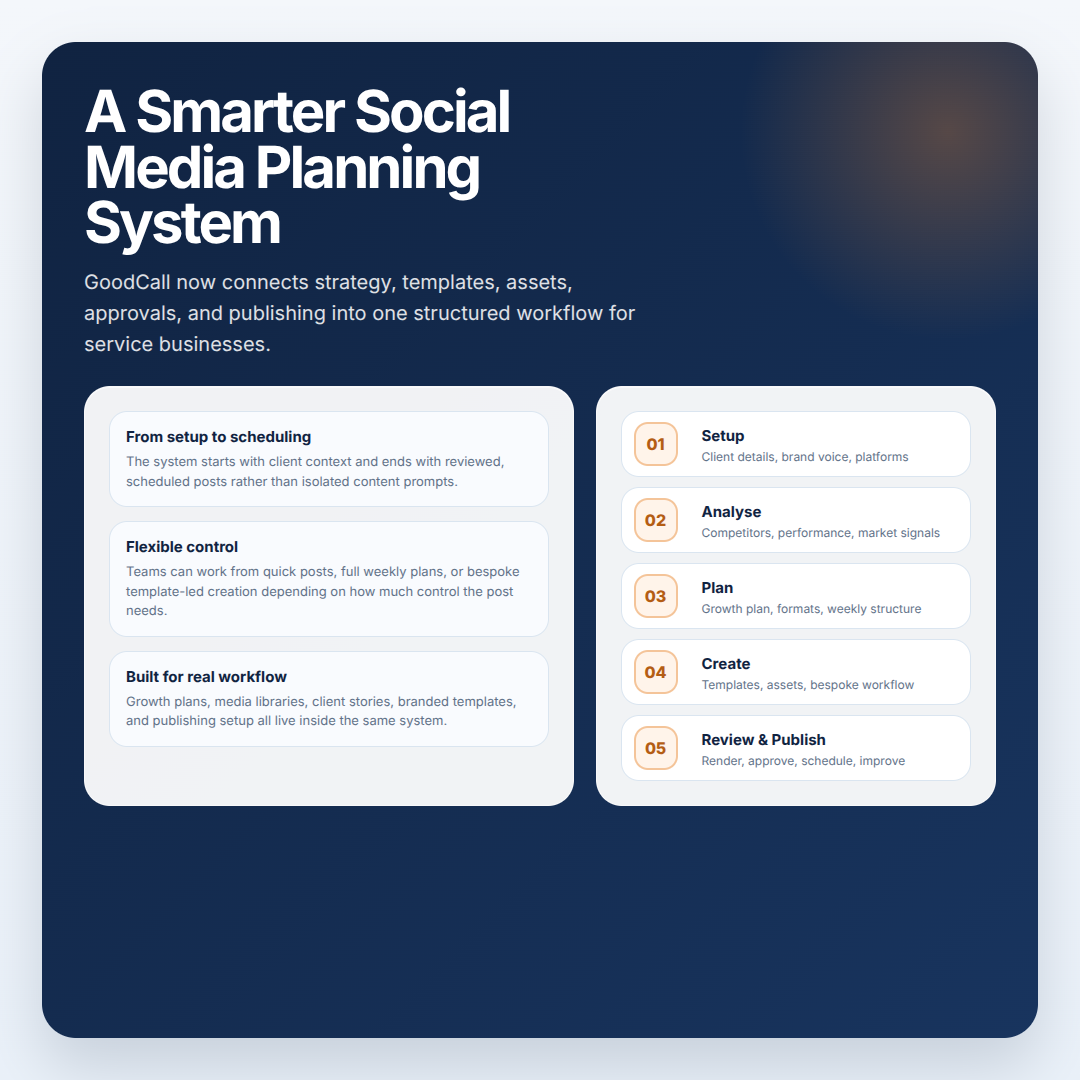
Over the past few months, we’ve been building a new content system inside GoodCall designed to make social media planning more structured, more useful, and far more practical for service-based businesses.
This has not been a cosmetic update or a simple AI add-on. It has been a full rethink of how social media content should be planned, created, reviewed, approved, and published when the goal is not just to post more, but to post with more consistency, more purpose, and more control.
The system is now live in Beta, and while we are still refining parts of it, the core workflow is in place.
Where It Started
The original conversations were not about AI for the sake of AI. They were about a practical business problem. Most service businesses know they need to post consistently, but the process usually breaks down when teams are forced to work across too many disconnected tools and too many undocumented decisions.
We wanted to create a workflow that could support real business needs: better planning, stronger brand consistency, more efficient use of client-specific assets, and much clearer publishing control.
Building the Right Foundation
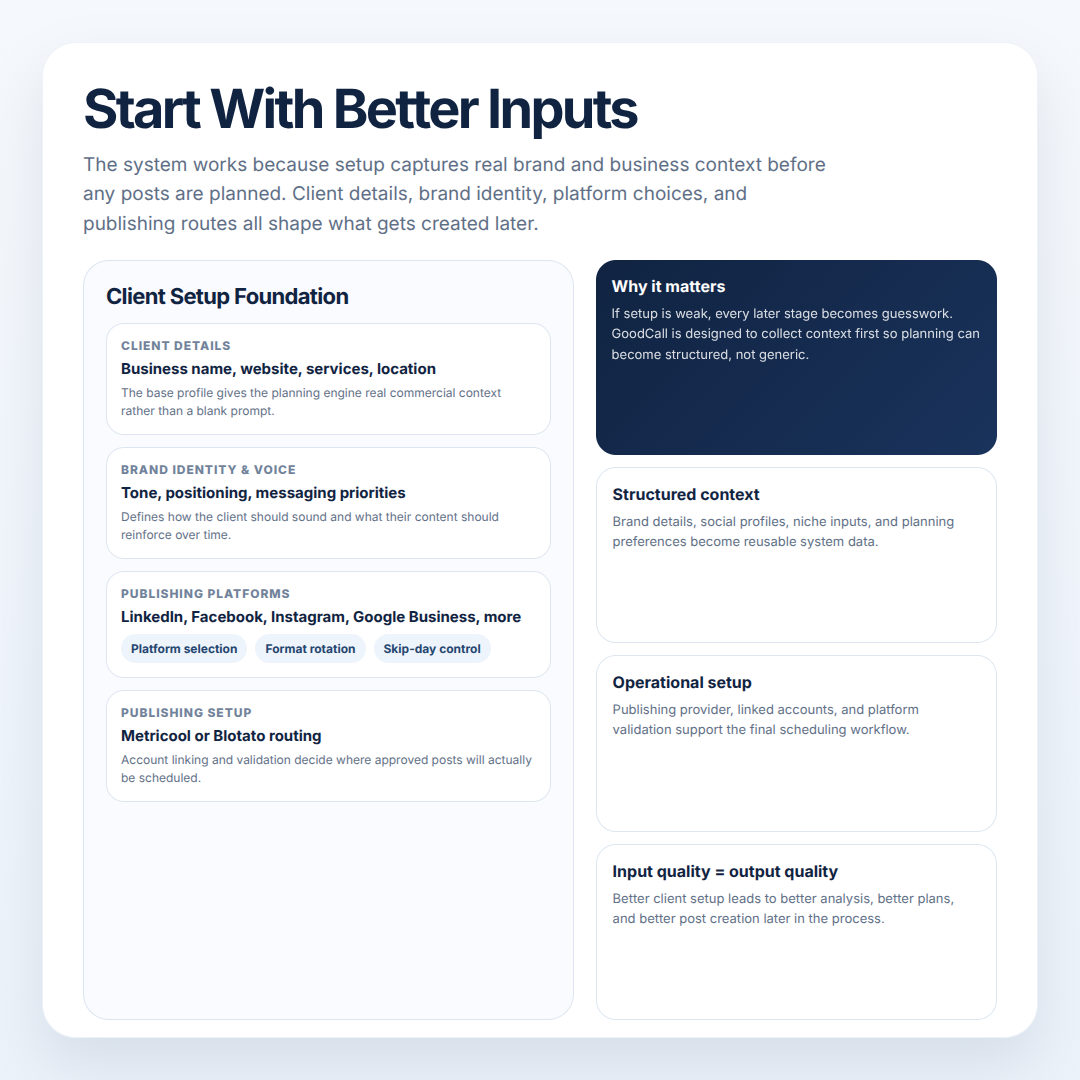
One of the first lessons we reinforced during development was that content quality depends on context. So before we focused on generation, we focused on setup.
Each client profile now gives the system a much stronger base by capturing client details, brand identity, tone of voice, website and service information, post format preferences, media assets, and approved proof content.
This matters because a serious content system should not be guessing who the client is. It should be working from a structured understanding of the business.
Data Collection, Competitor Analysis, and Better Context
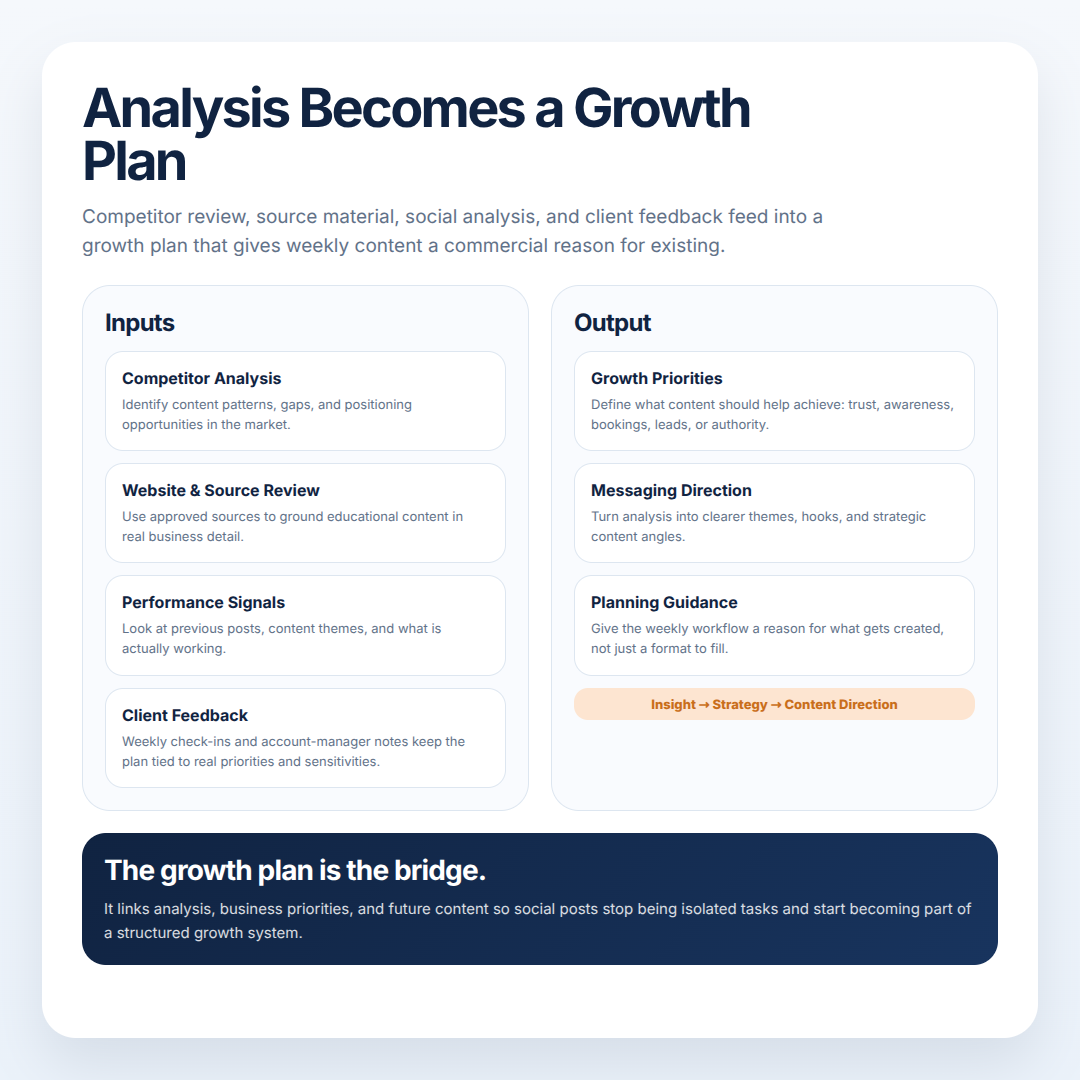
A strong social media content workflow needs context, not just prompts. That is why data collection and competitor analysis became an important part of the system. We wanted planning to reflect more than just a topic idea. It needed to reflect the client’s market position, the opportunities in their space, and the gaps that content could help close.
By supporting competitor analysis and wider content review, the system helps us understand what competitors are doing, which themes are oversaturated, where opportunities exist, and how a client can position themselves more clearly.
The Growth Plan: Turning Insight into Action
One of the most important parts of the platform is the growth plan. It links together feedback, analysis, strategic priorities, and content direction so that the planning workflow is tied back to real business goals rather than isolated content tasks.
That means content ideas can be connected to trust-building, education, bookings, awareness, authority, or whatever the client is actually trying to achieve commercially.
Client-Specific Templates and Post Format Rotation
A major part of the Beta has been the development of client-specific templates that sit inside a shared template library. That means the system can stay structured while still giving each client branded visuals that feel like their own.
We also introduced post format rotation, which allows each client to define the rhythm of their week in advance. Instead of starting from scratch every time, the team can work from a consistent weekly structure and then adapt it as needed.
- quote cards
- insight cards
- framework cards
- stat cards
- before and after posts
- behind the scenes posts
- photo carousels
- testimonials and client stories
Media Management and Proof Content
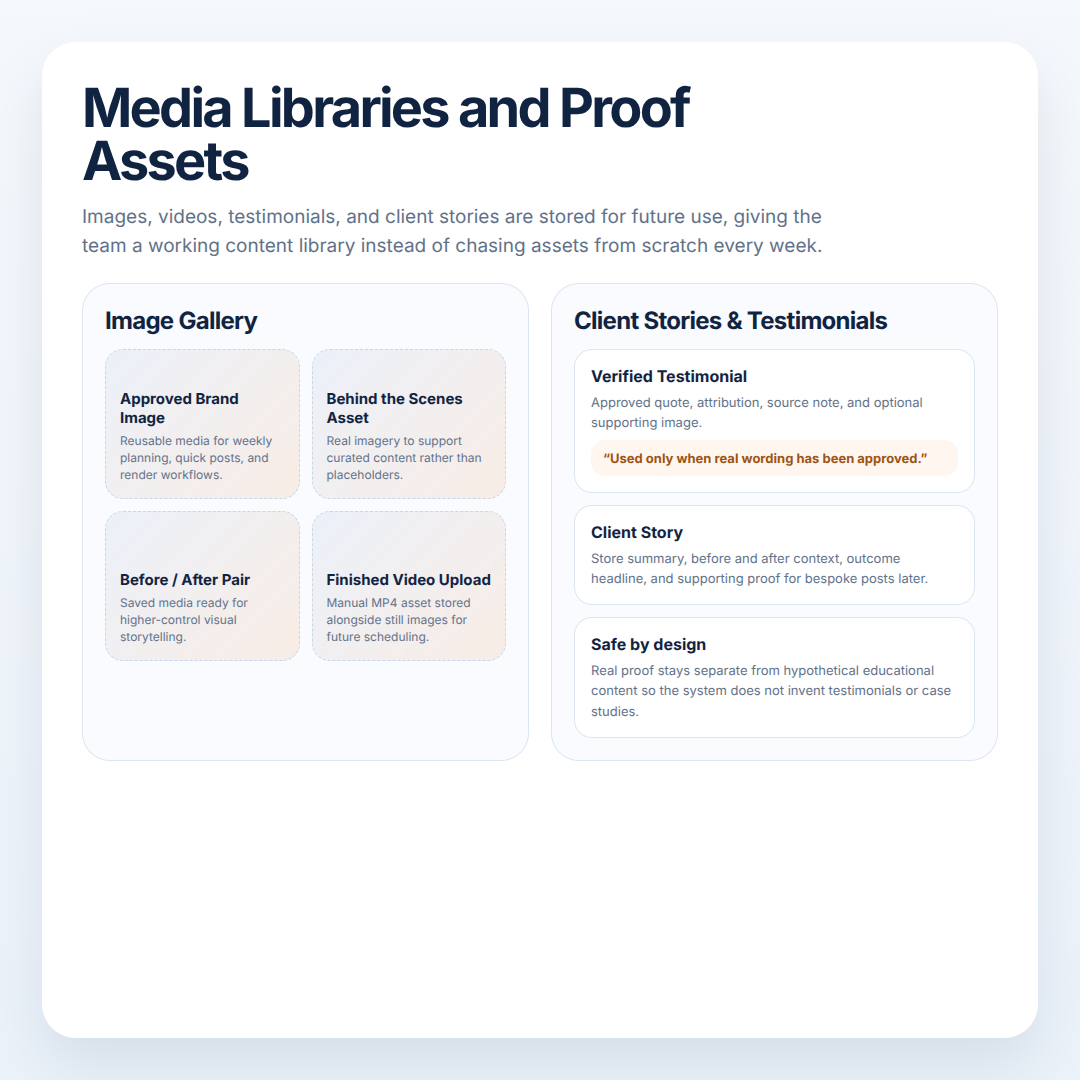
Media handling is a major part of any serious social media workflow, so we built it directly into the platform. Each client can now have an image gallery where approved assets can be uploaded, stored, and reused.
We have also introduced a dedicated library for client stories and testimonials. This was a deliberate choice. Proof-led content is too sensitive to automate loosely, so the platform treats approved stories, quotes, attribution, and supporting proof as trusted inputs rather than things to invent.
From Quick Posts to Full Weeks of Content
One of the strengths of the new system is the range of control it offers. Some users want speed and efficiency. Others want complete editorial oversight. So we built the workflow to support both ends of that spectrum and everything in between.
The platform now supports single quick posts, day-by-day planning, full week planning, bespoke week creation, manual media attachment, editable generated content, and approval and scheduling workflows.
The key principle: users can move from low-input planning to fully controlled content creation without changing systems or losing consistency.
The Bespoke Workflow
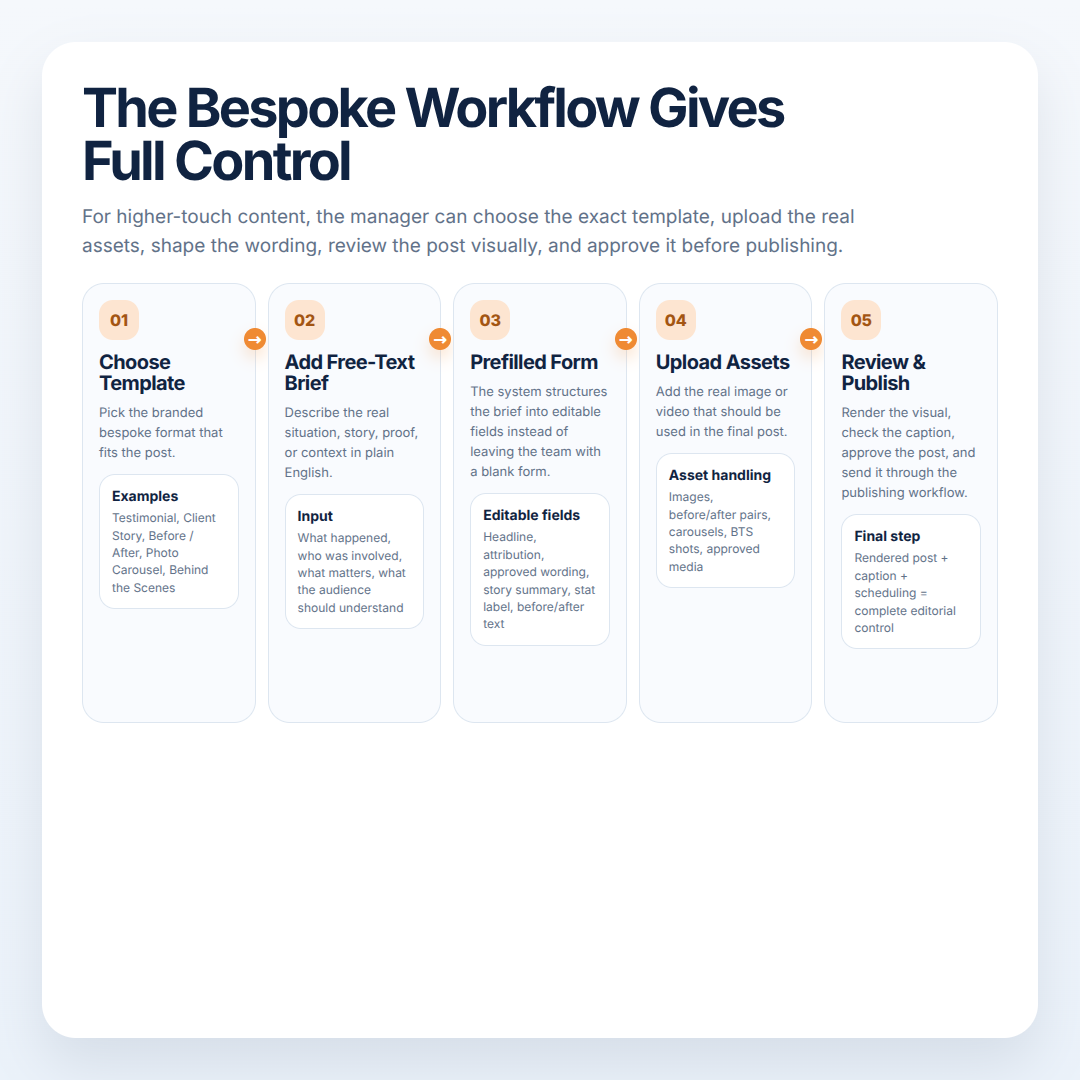
One of the most valuable additions in Beta is the bespoke workflow. This is designed for posts that need more control, more specificity, and more client-led input. Rather than asking AI to invent something overly personal, the bespoke workflow allows the user to choose a template, write a free-text brief, upload the relevant media, review a structured prefilled version, and refine the post before rendering.
This makes it much easier to create content such as testimonials, client stories, before-and-after posts, behind-the-scenes posts, and other proof-led formats without losing editorial judgment.
Publishing, Scheduling, and What Comes Next
Behind the scenes, we have also done a significant amount of work on publishing setup, linked account validation, media handling, render workflows, approvals, and clearer scheduling support. These operational details are essential if a content system is going to work reliably day to day.
The platform is still in Beta, and that matters. We are still refining areas such as previews, rendering, media handling, and edge cases. But the core system is in place and already proving the model: a more structured, scalable, and flexible social media planning system for service businesses.